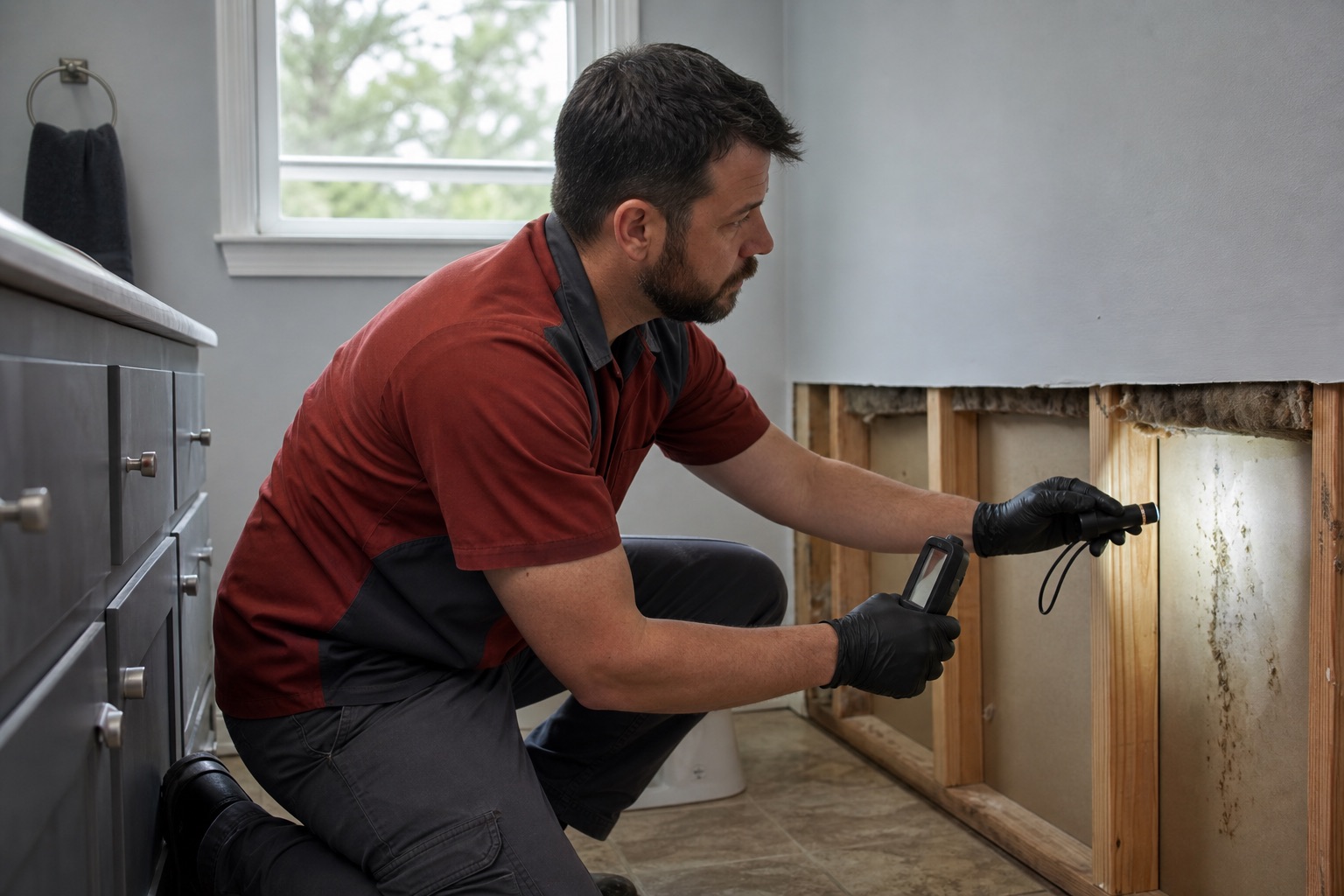
Do not settle for a surface-level answer. Mold inspection should fit the moisture source, affected materials, work boundary, and larger remediation plan.
Explain what you see or smell, when it began, and whether it changed or returned.
2
Connect it to moisture
A recent leak, humid area, roof problem, or damp space may help frame the condition.
3
Define the work boundary
Evaluation should consider nearby and concealed materials, not only the first visible mark.
4
Make the next decision clear
The result should support better choices about containment, removal, drying, cleanup, and repair planning.
Greensboro service context
Mold inspection should answer a larger question.
Describe the building
Share whether the affected space is a home, apartment, rental, office, or retail interior and where it sits in the building.
Describe the moisture history
Greensboro callers may mention musty basements, damp wall cavities, bathroom moisture, and water left behind by leaks. Explain what changed and whether the source is understood.
Describe the affected area
Include flooring edges, wall bases, cabinets, closets, crawl spaces, adjoining rooms, and any other place where conditions changed.
Moisture can remain behind a wall finish, under flooring, beside a vanity, or in a basement area after the obvious leak has stopped. Greensboro Mold Remediation Co. helps property owners describe the condition clearly and organize the questions that separate careful remediation from superficial cleanup.